Slow Pulp
Slow Pulp are uniquely acquainted with the process of regrowth. Singer and guitarist Emily Massey met childhood friends Henry Stoehr (guitar), Alex Leeds (bass), and Teddy Mathews (drums) in Madison, WI in the mid 2010s, kicking off a decade-strong musical bond. Raised on ’90s alt-rock radio and coming of age during the 2000s indie wave, they took a pan-American approach to rock music—transcending the genre’s inner boundaries in service of a sound critics across the board have applauded but struggled to describe—that made them stand out in the small city’s scrappy scene. But in 2018, the lifelong Wisconsinites left their comfy surroundings for the midwest’s metropolis, transplanting from Madison’s rich soil to Chicago’s concrete grid.
This was just the first of Slow Pulp’s new beginnings. Riding high from their second EP’s notable reception, they arrived in Chicago with the wind at their backs. They found their new scene more than welcoming, but other issues sprung through cracks they didn’t know existed. Living and touring together, they realized this constant proximity was “not the most conducive to figuring out how to be a band,” Massey says. “There were a lot of growing pains.” Work schedules conflicted. Massey caught Lyme’s Disease and Mono, and her mother and father, the latter, a veteran musician, was seriously injured in a car crash. She used her time taking care of them in Wisconsin as an opportunity to record vocals with him. These vocals appear on the band’s groundbreaking 2020 debut LP, Moveys.
A 2022 COVID scare forced Massey to write many of the lyrics for that album’s follow-up, Yard, in a cabin in northern Wisconsin, but the band took it in stride again, sending stems back and forth across state lines. “I discovered that it felt good to be completely alone,” Massey says. “That level of isolation was huge for my creative process.” Beyond those parts, though, Yard was a full-band effort, and this synergy is evident from the first chord. Blending the raw power of their early tapes with sharper lyrics and arrangements that showcased their stylistic range, it established them in indie rock’s highest echelon. If Moveys put Slow Pulp on the global stage—on tour with the Pixies and Death Cab and Alvvays, bands they’d bonded over in those early Madison years—then Yard proved they belonged there.
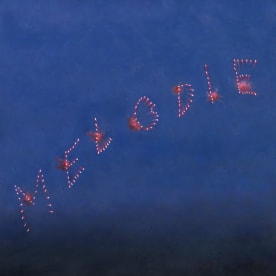
Slow Pulp started the songs that comprise their third album Melodie, due out September 18 via ANTI-, with nothing to prove to the public. But reflecting on past lives and past relationships forced them to reevaluate their approach and, once again begin anew. The result is a record that balances power-pop euphoria, acoustic heartbreak, and the ocean of sound between them.
This time, they looked to their collective past for inspiration. In most of Slow Pulp’s time living in Chicago, lyrics have mostly been helmed by Massey’ (hence the solo trips north). But back in Madison, words flowed more freely between her and Stoehr as they bounced ideas off of each other until they coalesced. The seedlings of the songs that comprise Melodie germinated the same way. “Emily and I were reconnecting with how we wrote together when we first met,” Stoehr says.
See All Videos
Red Car
See All Recent Press
- Slow Pulp Present New Track/Video For "Spill", New Album 'Melodie' Out September 18
- Slow Pulp Present New Single/Video, “Spill” New Album, Melodie, Out September 18th via ANTI- Tickets for North American & EU/UK Tour On Sale Now
- Slow Pulp Share New Video / Single "Not For Nothing", New Album 'Melodie' Out September 18
- Slow Pulp Announce New Album 'Melodie', Share Track/Video For "Better Man"
- Slow Pulp Announce Fall 2026 North American Tour Dates
- Slow Pulp Shares Glitchy Remix of "Slugs" (yeule & Kin Leonn Remix), Announces Fall US Tour Dates
-
Sep 18th 2026
Melodie
See All Online Store
-
Melodie LP (Black)
$23.99 Purchase -
Melodie LP (Clear Pink)
$25.99 Purchase


